Saturday, March 13, 2010

California


All Images © 2010 Declan J. Dillon
Please do not use/reproduce without my explicit, written permission.


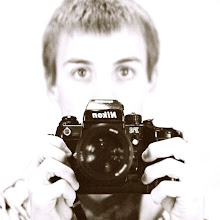
I'm back home for a week, so I figured I'd revisit a few of my favorite places. Sadly, I came to discover that one of my all-time favorite locations, a hidden junkyard in the Santa Cruz Mountains, had been cleaned out, the property put up for sale. Although I am disappointed, I am glad that I went up there in the first place, choosing not to relegate it to my "I'll come back to it" list. Far too many opportunities are squandered with the "I'll come back to it" mentality. The chance to capture a phenomenal shot occurs only once. One must be there to capture it at the right time, even if it means disregarding other commitments. I cannot even begin to recall the number times that I blew off rowing practice in order to take pictures. Although some did not and still do not approve of this, I prefer to weigh the benefits against the detriments. After all, it's been nearly three years since I last set an oar in the water, but only three minutes since I last tweaked my camera (and yes, when I get a Leica, I WILL sleep with it). I think back to of all the potentially amazing shots I have missed because I told myself "I'll come back to it." Certain things are worth sacrificing for. The difficult part is deciding where to draw the line.

Tuesday, March 9, 2010

Junkyards and Yard Cars

Old Dodge and abandoned houses, Marysville, MT.

Unkown Kit Car, next to someone's trailer, York, MT.

1939 Chevy, junkyard, Four Corners, MT.

Methlab-tastic Dodge Commander RV, someone's yard, Saratoga, CA.


All Images © 2010 Declan J. Dillon.
Please do not use/reproduce without my explicit, written permission.


The word junkyard is a misnomer, because junkyards are not actually full of junk. They are full of photographic gold: beautiful patinas, artifacts from past existences, juxtapositions, contrast of purpose. Montana's junkyards are the best I've ever stumbled through. However, your average yards in Montana are more than sufficient; it would appear that nearly all of them, especially the rural ones, contain some sort of long-dead vehicle or piece of farm equipment. I don't believe anyone has ever sold a car here. Whenever one ceases to function (by virtue of severe mechanical failure or severe cash-flow failure) it would appear that it is parked on some unused corner of the property. By no means is this a crack at Montanans, or anyone else with yard cars. I love them. Please, by all means, continue to park worn out, old machinery in your yards, and continue to provide me with things to photograph.

Tuesday, February 9, 2010

Change


All Images © 2010 Declan J. Dillon
Please do not use/reproduce without my explicit, written permission.


Change. The only constant in our world. The sole concept that never changes is, rather ironically, the fact that there will always be change. People change, environments change, objects change, but change does not change. Change defines the world in which we inhabit. Everything changes, and everything will continue to change, and there is no escaping that fact.

We tend to look at change as being either “good” or “bad.” Change is not as simple as the way we evaluate and explain it. As technologically advanced a population as we are, our minds are still not completely developed. Imagine how much we have progressed mentally since the time of the first humanoids. We should not assume that because we are the latest, most intelligent people to inhabit the earth, that we are the pinnacles of human evolution. We often forget that we are but a infinitesimal spec in time. We believe we are masters of a universe whose mere fringes we are only beginning to comprehend. Because we cannot possibly know whether change is truly “good” or “bad” on a universal scale, we examine it on an individual level, trying our hardest to prevent it or provoke it based upon our personal desires. As enticing as this may be, we need to learn to accept that change will always exist and cease attempting to control every aspect of our existence. There are things that we will likely never have the ability to control. Our perception of control is nothing more than an illusion that we have spun for ourselves, and it serves only to distract us from what we should be doing: broadening our understanding of our world, and the concept of change.

When change occurs, instead of panicking and attempting to prevent it, we should be investigating it on both personal and universal (or at least as close as we can come to universal) levels. We do not need to prevent change, instead, we need to preserve the memory of it. If we cannot suppress our yearning for control, then the least we can do is document the changes we encounter for those who will succeed us, so that they may take into account what we knew and experienced when forming their own worldviews.

Now here is where photography becomes relevant. Never has it been easier to record our world than now. With the prevalence of inexpensive, highly-accessible cameras (mainly in the form of the camera phone), anyone can be a historian, though many will simply choose to immortalize their friend’s naked keg stand for decades to come. Personally, I’ll stick to capturing the decaying rubbish that litters our fields and the sides of our roads, before it is swept away into landfills and lost forever.

Friday, February 5, 2010

The Snowplow


All Images © 2010 Declan J. Dillon.
Please do not use/reproduce without my explicit, written permission.


Nearly a year ago, I came across this snow thrower far on the outskirts of Bozeman, Montana. I was on a college visit and saw it while wandering around near the b&b I was staying at. I snapped a picture and went on with my day, not realizing that in the coming year, I would be visiting it again.

It's an old (obviously) Sicard Senior (not so obviously), manufactured in the 1950's by Sicard Industries. While not out of place in a state like Montana, its specific location seems odd. It seems to have just been parked there and left, but its location in relation to civilization says otherwise. It sits on a slight hill, facing a little-traveled two lane backroad, far away from any town or other place that would necessitate a machine of such caliber. My only conclusion is that someone desiring a large-scale yard ornament positioned it there, but that seems like an awful lot of trouble to go through for a simple decoration.

Virtually everything that is abandoned has a story behind it, from the child's toy left in the woods, to the vintage pickup truck resting under the collapsed roof of an old barn, to the homeless man sitting on the corner of the Walmart parking lot, attempting to coax a few dollars out of someone's cavernous pocket so that he may eat. These stories range widely in depth and color, but one thing remains true of all of them: they provide some, even the most minute, insights into past realities different to our own. The snowplow is yet another object with a story just waiting to be told, which is why I keep returning to it.

Thursday, February 4, 2010

Cars, Cars, Cars

Side of a road, Saratoga, California.

Industrial park, Bozeman, Montana.

Abandoned junkyard, Santa Cruz Mountains, CA.

Unknown private property, Saratoga, CA.

Industrial park, Bozeman, MT.

Abandoned junkyard, Santa Cruz Mountains, CA.

All Images © 2010 Declan J. Dillon. All Rights Reserved.
Please do not use/reproduce without my explicit, written permission.


They're everywhere. They rest in fields, old buildings, people's yards, and on the sides of roads, silently melting into their surroundings, slowly becoming entombed by layers of mud and foliage. Some will be found, recovered, and restored. Others, however, will continue to sink into the land they reside upon, eventually becoming a part of it.

Much to the annoyance of my family and friends, I live and breathe "car." I have been known to go to absurd lengths to photograph abandoned cars, or just cars in general. I spend most of my spare time wandering around, hoping to encounter something interesting. The images above are the product of my ongoing search.

Wednesday, February 3, 2010

The Abandoned


All Images © 2010 Declan J. Dillon. All Rights Reserved.
Please do not use/reproduce without my explicit, written permission.


We exist to consume. We spend most of our lives eating, studying, and working, all so that we can continue to eat, study, and work, and eventually produce more who eat, study, and work. Our society is centered on consumption. What we do not realize, however, is how much we discard. We constantly cast away vast quantities of literature, playthings, technology, dwellings, transportation, and even people.

I am not here to critique society, but my opinions will, inevitably, affect what I express. However, I have little desire to comment on society, so I'll leave that to the philosophers. I am here because I take great interest in what society throws away. Trash provides phenomenal insights into the character of those who discarded it. It also makes for some rather interesting pictures.